By: Dr. Khairun Najihah Sabri
Senior Lecturer
Faculty of Food Science and Technology, UPM
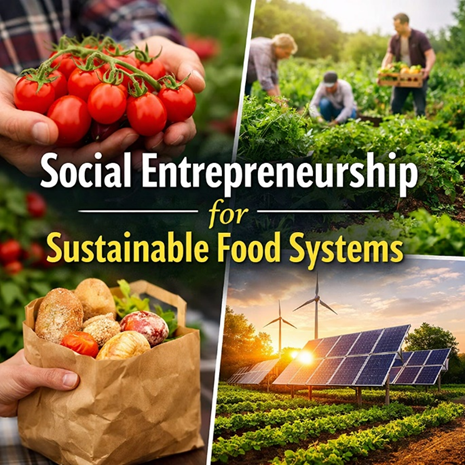
Malaysia’s food system is increasingly shaped by complex challenges, including food security, rising production costs, environmental pressures, and unequal access to safe and nutritious food. While food science and technology remain fundamental to addressing these issues, there is growing recognition that entrepreneurship particularly social entrepreneurship plays a critical role in translating scientific knowledge into sustainable and inclusive solutions.
In Malaysia, this approach is especially relevant given the central role of micro, small, and medium enterprises (MSMEs) in the national economy. MSMEs contribute close to 40% of Malaysia’s Gross Domestic Product (GDP) and provide employment for nearly half of the national workforce, underscoring the importance of entrepreneurship as both an economic and social driver.
Addressing Food Waste Through Social Innovation
Food waste remains a major concern in Malaysia. It is estimated that the country generates approximately 15,000–17,000 tonnes of food waste per day, with a significant proportion still edible. This issue presents both a challenge and an opportunity for food-based social entrepreneurship.
Social enterprises that focus on surplus food redistribution, food upcycling, and sustainable processing models illustrate how scientific knowledge can be applied to address environmental and social problems simultaneously. For food scientists and technologists, such initiatives highlight the importance of integrating technical expertise with innovative and socially responsive business models.
Graduate Employability and New Career Pathways
Entrepreneurship is increasingly recognised in Malaysia as a viable and strategic career pathway for graduates, including those in food science and technology. Beyond employment in the food industry, graduates are now exploring roles as startup founders, social entrepreneurs, product innovators, and community-based food producers.
Embedding entrepreneurship and social innovation into food science education equips graduates with critical skills such as problem-solving, adaptability, ethical decision-making, and market awareness. These competencies enhance employability while also preparing graduates to contribute meaningfully to society.
Strengthening Sustainable and Inclusive Food Systems
Social entrepreneurship aligns closely with the broader goal of building sustainable food systems—systems that are economically resilient, environmentally responsible, and socially inclusive. By balancing profit with purpose, food-based social enterprises support long-term development rather than short-term gains.
For faculties of food science and technology, engagement with entrepreneurship and social entrepreneurship represents a strategic extension of their academic mission. It reinforces the relevance of food science research, teaching, and innovation in addressing national priorities such as food security, public health, and sustainable development.
Conclusion
As Malaysia continues to strengthen its food ecosystem, the integration of food science, technology, and social entrepreneurship will become increasingly important. Institutions such as UPM are well positioned to lead this transformation by producing graduates, research outputs, and innovations that serve both industry and society.
By embracing social entrepreneurship, faculties of food science and technology reaffirm their role not only as centres of scientific excellence, but also as catalysts for inclusive, sustainable, and impactful food systems in Malaysia.
Reference
SME Corp. Malaysia. (2022). SME annual report 2021/2022. SME Corporation Malaysia.
Solid Waste and Public Cleansing Management Corporation (SWCorp). (2023). Food waste statistics in Malaysia. Ministry of Local Government Development, Malaysia.
Ministry of Higher Education Malaysia. (2022). Graduate tracer study report. MOHE.
Universiti Putra Malaysia. (2024). Blueprint keterjaminan makanan Universiti Putra Malaysia. Universiti Putra Malaysia.
Date of Input: 21/01/2026 | Updated: 21/01/2026 | nurulizzah
MEDIA SHARING










.jpg)