Prepared by: Nur Izzati Binti Mohd Amir
Executive Officer 4
Office of The Deputy Dean (Postgraduate, Research, And Innovation)
Faculty of Food Science and Technology,
Universiti Putra Malaysia
Anger is often seen as a negative emotion that harms both ourselves and others. However, in reality, anger is a natural human reaction and can even be considered a defense mechanism that helps us respond to threats, injustice, or stress. This emotion is not meant to be fought against, but rather understood especially in terms of its causes and how we can manage it effectively.
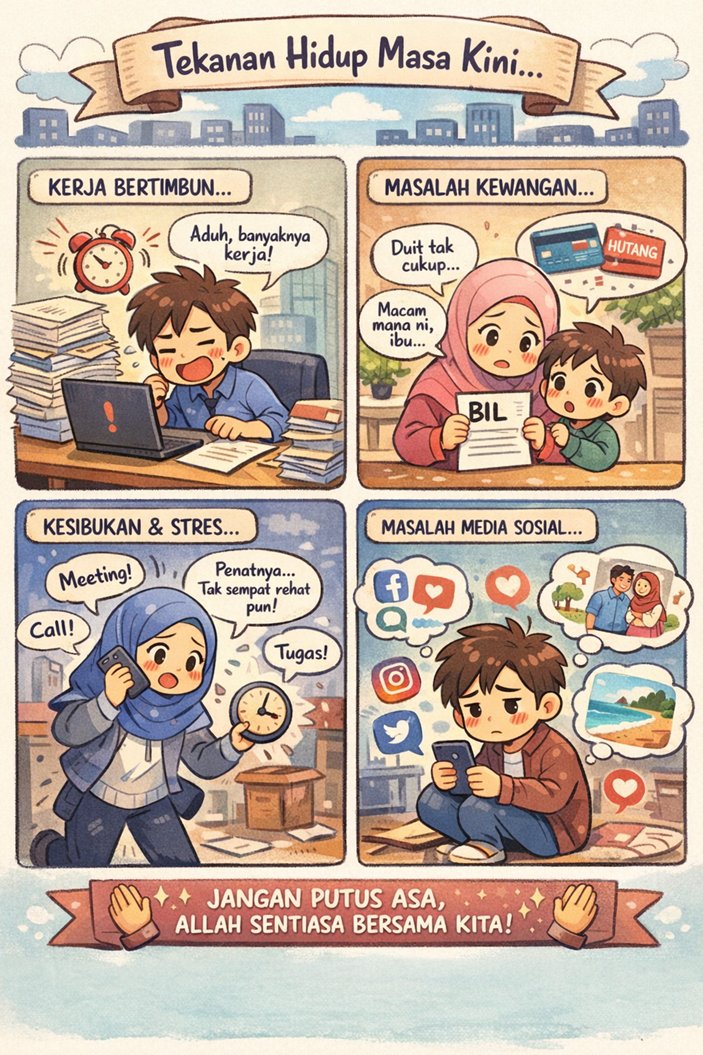
Anger today often stems from increasingly complex life pressures and high social demands. While every individual is different, there are several common factors that frequently trigger this emotion:
Life Pressure and Workload
Excessive demands from work, finances, and daily responsibilities can lead to mental and emotional exhaustion.
Feeling Unappreciated
A lack of recognition from employers, partners, or family may cause frustration that can turn into anger.
Unmet Expectations
Expectations of oneself or others that are not fulfilled often trigger disappointment and anger.
Emotional Burnout
Prolonged stress without adequate rest can make a person easily irritated and quick to anger.
Communication Problems
Misunderstandings, harsh ways of expressing oneself, or the inability to convey feelings effectively can lead to conflict.
Influence of Social Media
Comparing lives, negative comments, and exposure to sensational news can increase emotional stress.
Lack of Self-Control
Being unaccustomed to managing emotions may cause someone to act impulsively.
Personal Issues or Past Trauma
Unresolved past experiences can unconsciously trigger anger.
Lack of Values or Moral Awareness
When values such as patience, empathy, and self-awareness are not nurtured, emotions are more likely to control actions.
In Islam, anger is not seen merely as a common emotion; it is also associated with the influence of Satan, which can drive a person to act beyond self-control. As narrated in a authentic hadith by Abu Dawud (Hadith 4784):
Ø¥Ùنَّ الْغَضَبَ Ù…ÙÙ†ÙŽ الشَّيْطَانÙØŒ ÙˆÙŽØ¥Ùنَّ الشَّيْطَانَ Ø®ÙÙ„ÙÙ‚ÙŽ Ù…ÙÙ†ÙŽ النَّارÙØŒ ÙˆÙŽØ¥Ùنَّمَا تÙطْÙَأ٠النَّار٠بÙالْمَاءÙØŒ ÙÙŽØ¥Ùذَا غَضÙبَ Ø£ÙŽØَدÙÙƒÙمْ Ùَلْيَتَوَضَّأْ
"Indeed, anger comes from Satan, and Satan was created from fire, and fire is extinguished by water. So when one of you becomes angry, let him perform ablution (wudu)."
This hadith provides a subtle yet profound guidance. It does not deny that anger exists in humans but reminds us that uncontrolled anger can open the door to negative influences. Therefore, Islam emphasizes managing emotions wisely, rather than denying their existence.
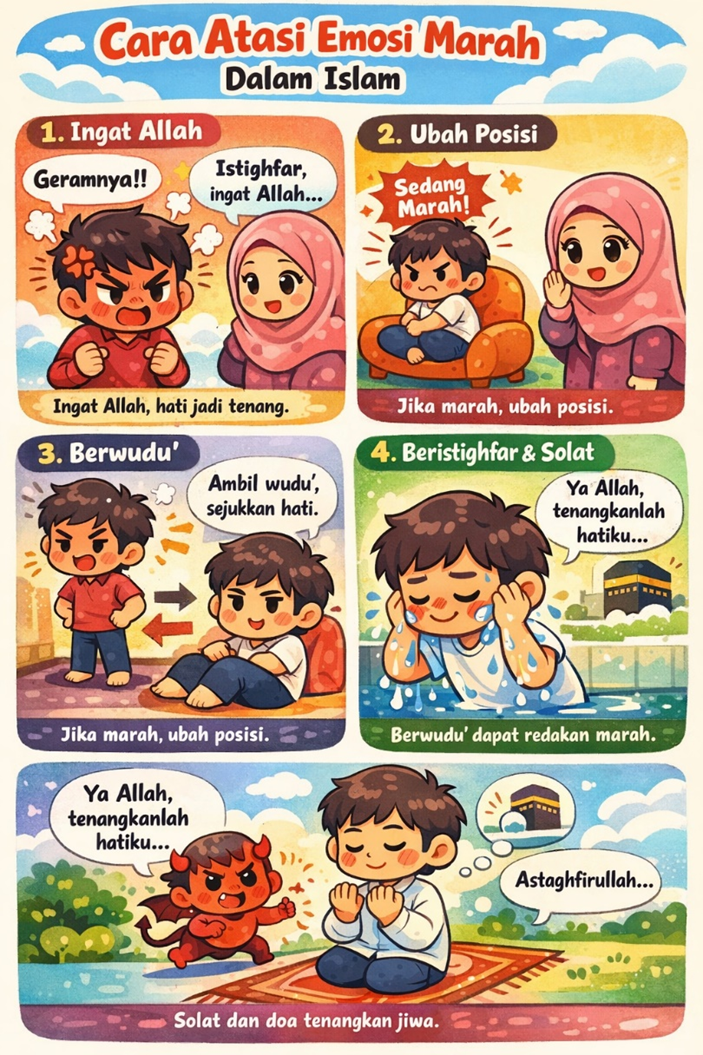
Ways to Manage Anger in Islam:
1. Control Yourself When Angry
Restrain your actions and avoid reacting impulsively. True strength lies in self-control, as taught by Prophet Muhammad ï·º.
2. Recite Isti‘azah
Say “A‘udhu billahi minash-shaytaanir-rajeem” to seek protection from Satan, who incites anger.
3. Perform Ablution (Wudu)
Recommended in the hadith narrated by Abu Dawud, as water helps calm emotions and soothe anger.
4. Change Your Physical Position
If standing, sit; if sitting, lie down. Adjusting your posture helps calm your body’s physical reactions.
5. Remain Silent
Avoid speaking while angry to prevent saying hurtful or regrettable words.
6. Remove Yourself from the Situation
Take a moment to calm down by stepping away from the source of anger.
7. Increase Remembrance of Allah (Dhikr)
Remembering Allah helps soothe the heart and control emotions.
8. Practice Patience (Sabr)
Patience is a key principle in managing anger and developing good character.
9. Self-Reflection (Muhasabah)
Reflect on the cause of your anger and improve yourself to avoid being easily influenced by negative emotions.
This hadith offers a profound redefinition of true strength. According to Imam al-Bukhari (Hadith 6114), the Prophet Muhammad ï·º said:
“The strong person is not the one who overpowers others. The strong person is the one who controls himself when he becomes angry.”
This means that real strength in Islam is not measured by physical power or winning in conflicts, but by the ability to control one’s emotions. A person who can restrain anger, think calmly, and avoid impulsive actions demonstrates inner strength of the highest order.
The hadith also teaches that anger is a test. In moments of intense emotion, one has a choice: either follow the impulse of anger or manage it with patience. Those who choose self-control are displaying a level of strength that is highly valued in the sight of Allah.
In essence, this hadith shifts our understanding of strength: it is not about dominating others, but about mastering oneself.
Date of Input: 01/04/2026 | Updated: 01/04/2026 | nurulizzah
MEDIA SHARING











.jpg)